U3A Settle
Art Appreciation
2025/26
New Leader
Julie Paisey is taking over as leader from David Holdsworth.
For a few months David will be a kind of deputy/assistant.
Our most recent meeting was on Tuesday 2nd June.
John Thurwell talked about Dante Gabriel Rossetti’s Lady Lilith.
He told of the social and economic background to the picture.
When the painting was 3 or 4 years old the face of the original model
was replaced.
After the death of the original owner of the painting, it found its way to the
Delaware Art Museum.
This was followed by a personal item on the Clapham Art Group’s
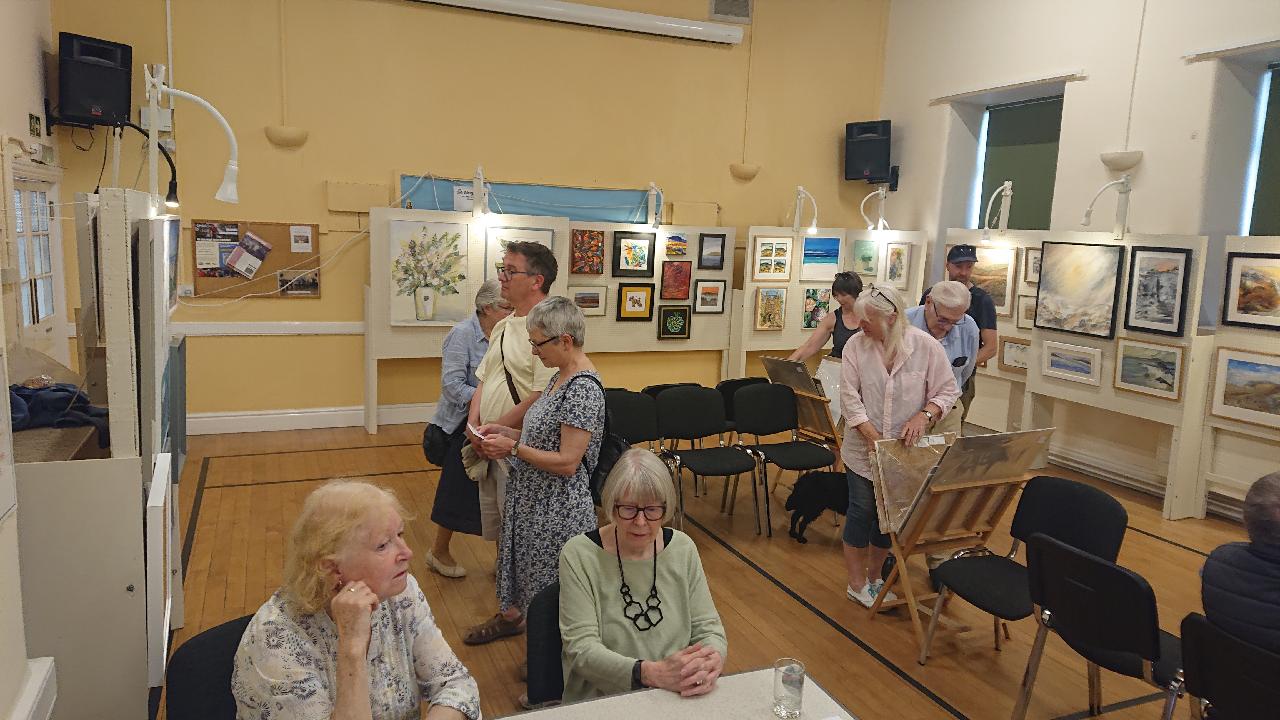
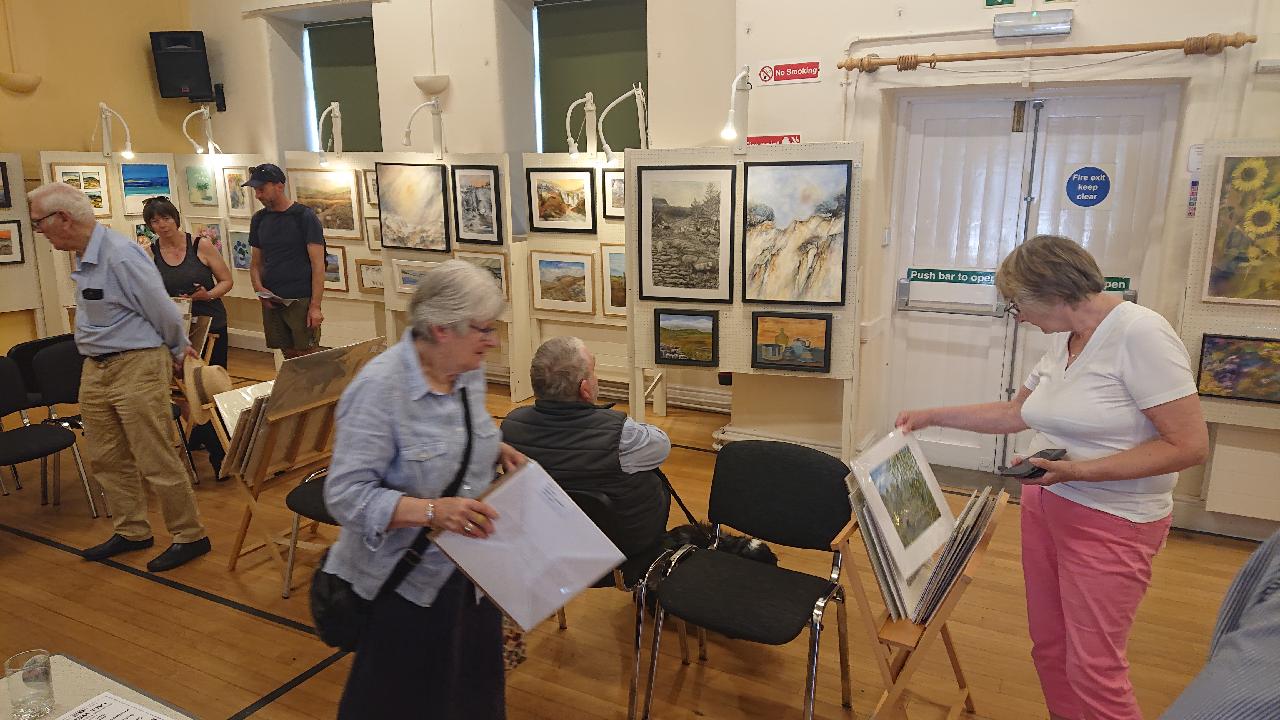
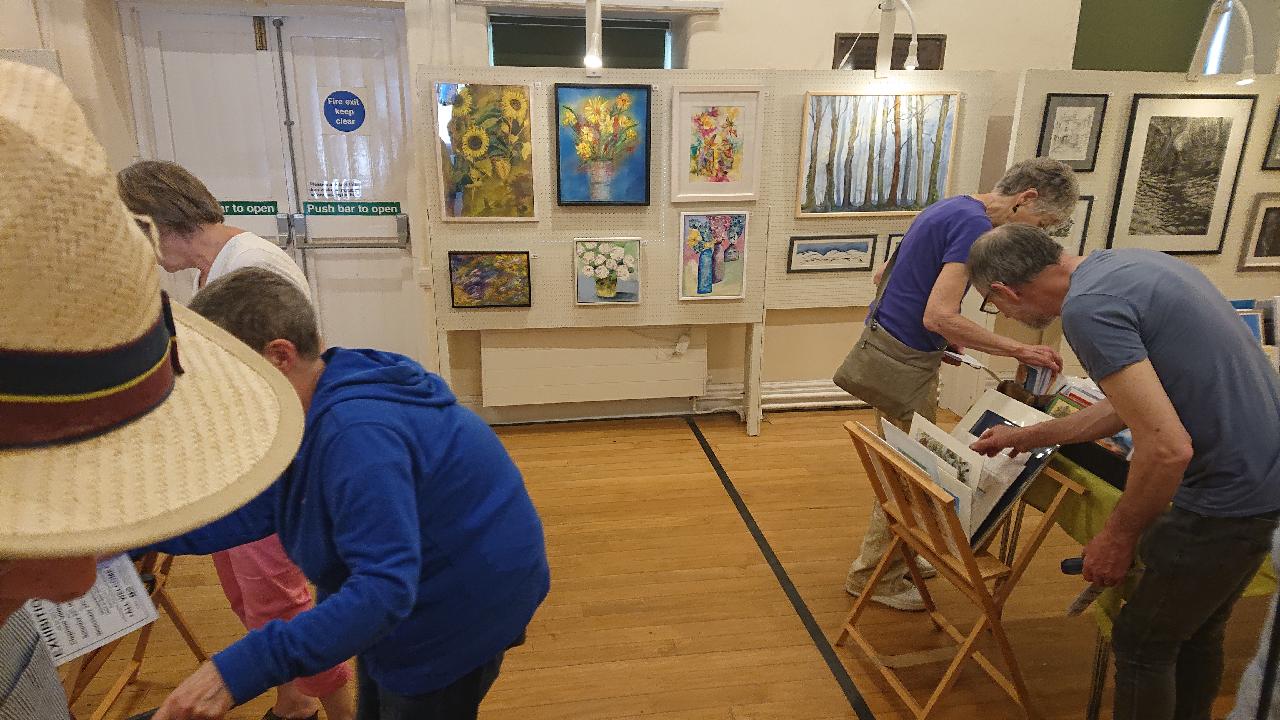
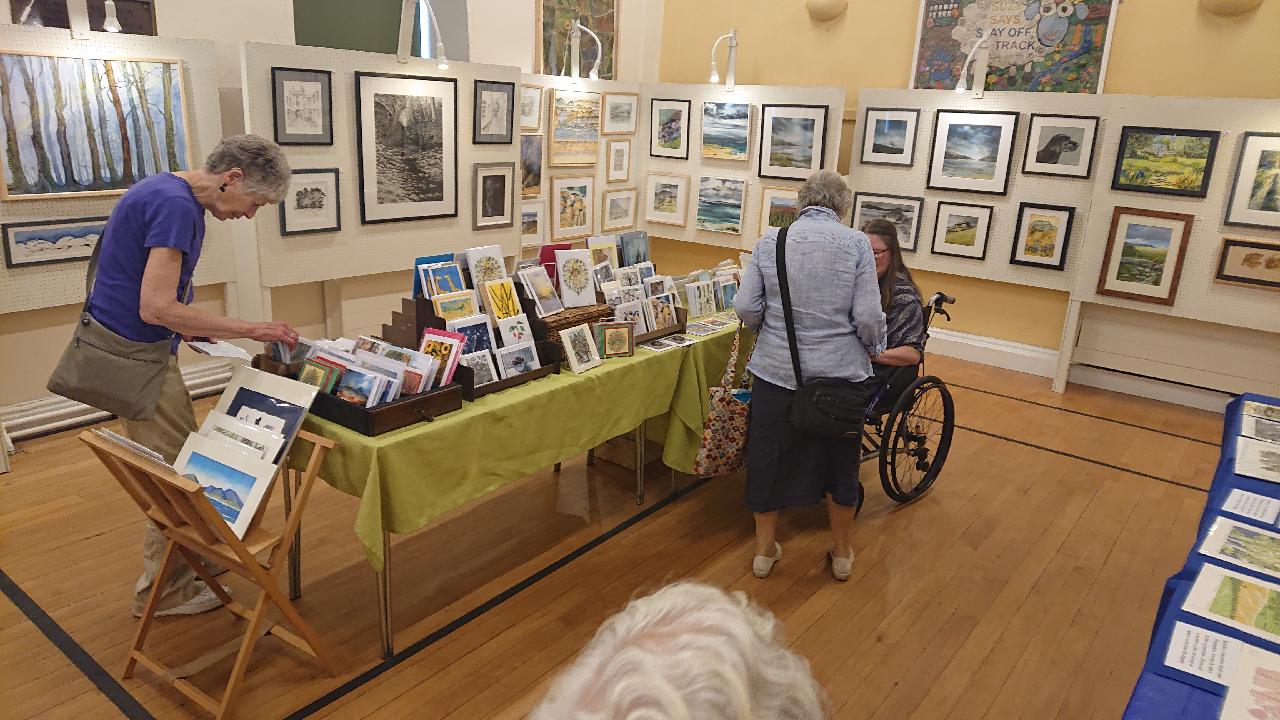
2026 exhibition, which closed on Wednesday 27th May.
By chance I recently watched a recording of
Andrew Graham-Dixon talking about Paul Nash
and his love of landscape.
I found a resonance with the Clapham Exhibition in that it included quite a lot of landscape.
You can look round the room at Clapham Art Show by clicking:
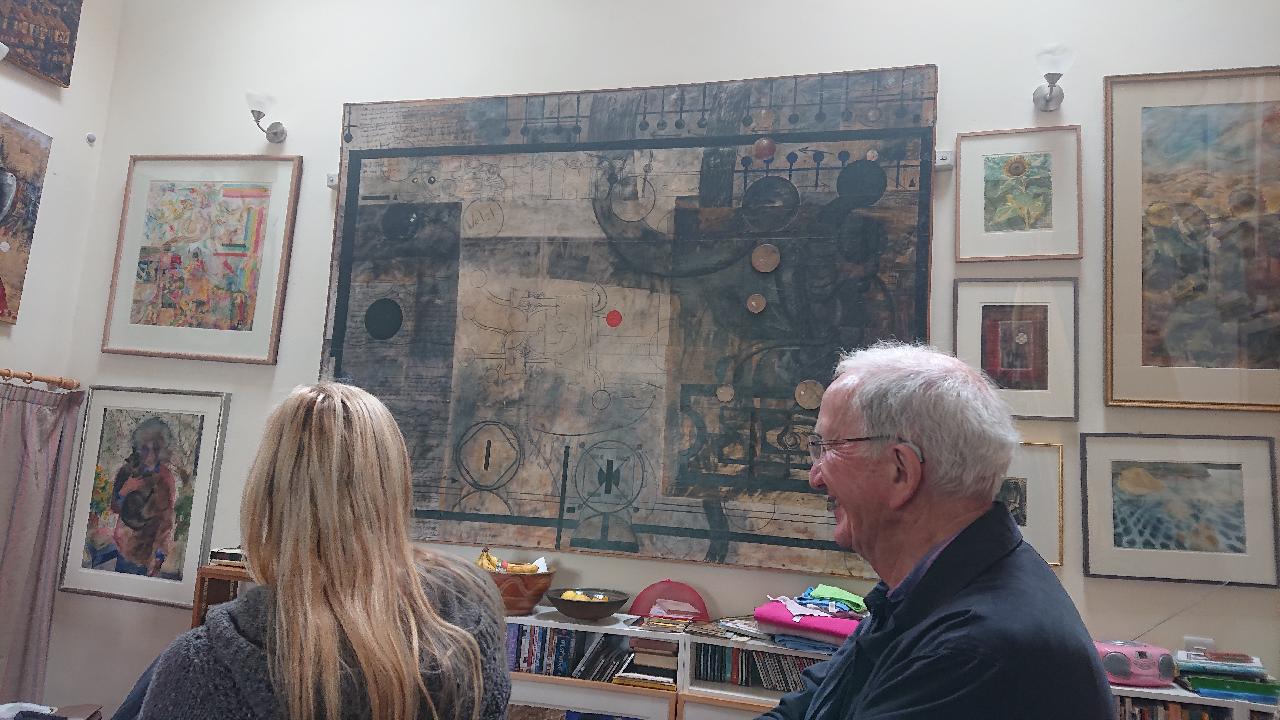
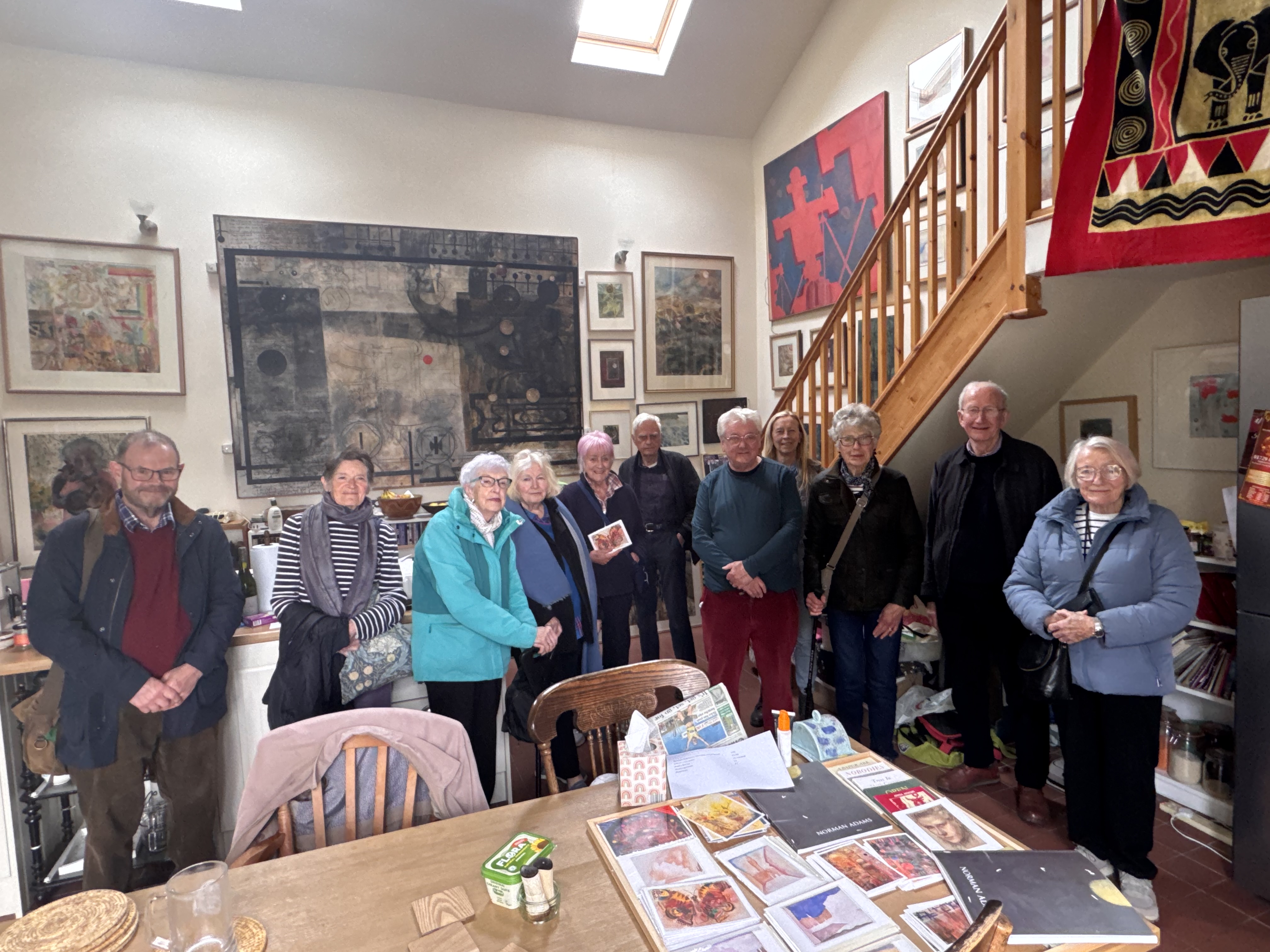 Our 5th May meeting went somewhat off-piste, and we ventured en masse
(well 12 of us) to Horton-in-Ribblesdale to visit the house cum studio of
the late Norman Adams.
Almost every seat was taken on the 1340 number 11 bus to Horton.
Norman’s son Ben now lives there, and described
for us the life story of his father.
A google search reveals
a Guardian obituary from 2005
and normanadamsra.com
where you can find the story of
his 1927 birth in Walthamstow to his death in 2005.
These accounts omit
the way that the loss of the end of his finger in an accident excused him
from PE at school and during PE lessons he spent time with the art teacher, drawing
and painting.
In 1956 he bought the house at Horton-in-Ribblesdale.
In 1962,
employment as head of painting at Manchester College of Art led to
week-nights in the family VW camper van in Manchester and weekends at home
in Horton.
The 1970s had summers on the Hebridean island of Scarp leading
to a series of watercolours.
In the 1980s in southern Europe watercolour
dried annoyingly quickly, no so on Scarp.
Much of his work was sort of
religious, except that he described himself as "a freelance agnostic".
Parkinson's disease forced him to abandon large works in oils, but he
continued with watercolours, and Ben described how his father's paint
brush would be rock steady on the painting while the rest of his body was shaking.
And the house still has very much the atmosphere of an artist’s studio, with
pictures from floor to ceiling.
The picture on the left shows the group of us in the kitchen.
The picture on the right shows two of us looking at Norman Adams’s picture of creation.
(Click either picture to enlarge it.).
Our meeting on 3rd March was
a presentation very appropriate for Lent, Diane Dillon gave us her
take on three pictures of the crucifixion, as portrayed by El Greco, in
the 1500s, and by Salvador Dalí and by Stanley Spencer in the 1900s. A
great contrast in the depiction of reverence and of cruelty. The Dalí
picture is in Glasgow’s Kelvingrove Museum which bought it for £8000 and
was criticised at the time for profligacy. Our afternoon was rounded off
by Jackie Allott telling of her love of Peter Doig’s paintings. Much
inspired by Gaugin, you can see a similar use of colour for emphasis
rather than verisimilitude.
The web still has info about Peter Doig’s
exhibition at the Serpentine Gallery in London which finished on 8th February.
On 3rd February.a select band of appreciators of Art gathered to chew
the fat over the Turner Prize exhibition in Bradford.
We started with a most helpful scene-setting from Roger Taylor who lived
in Bradford in the 1980s, and told how Bradford’s stature had grown
from the Media Museum, through "Bradford’s Bouncing Back"
to the City of Culture 2025.
LNER report a 26% increase in travel to Bradford.
We discussed whether the disability of the winner was a
factor, and compared our various preferences.
Here is a link to some photographs
taken on visits to the exhibition.
The session was rounded
off by Nick Temple with a wide ranging portrayal of the art of Marcel
Duchamp, who was more of a painter than exhibitor of urinals. Such
avant-garde art emerged as a reaction to the horrors of World War I. In
his time Turner was avant-garde.
There is a Marcel Duchamp Prize, established in 2000.
Like the Turner Prize it is given to young artists.
If you want a taste of the avant-garde,
it is there in Bradford until 22 Feb.
Click here for details of the Turner Prize Exhibition,
which ended on 22nd February.
We decided not to have a session in
January, but to urge people to go to Bradford’s Cartwright Hall and
discuss their reactions to it at our February meeting.
Our December meeting was on the 2nd and took the form of a pot pourri of items in which
someone presented a work of art that had impressed them.
We got a tremendous range from mediæval frescoes in Italy
to 21st century modernism in London and Louisiana. There was much
stimulating discussion some of which went beyond our immediate items to
the Turner Prize in Bradford.
Here is the list from this meeting.
Our November meeting was on Tuesday 4th.
- David Holdsworth looked at examples of conceptual art.
starting with a recent visit to the Andy Goldsworthy retrospective in Edinburgh (finished 2nd Nov).
and then looking at Roger Hiorns’ Seizure and the Unilever Series
of huge installations in Tate Modern between 2000 and 2012.
- Kairen Bradley introduced us to the work of
Isobella Kirkland,
a painter and biodiversity researcher in the US. She
is known for intricate, representational paintings that straddle art
history, natural science and ecological activism. Her works include
paintings of extinct species.
- Diane Dillon talked about Rosario de Velasco,
whose 1932 painting of Adam and Eve in modern dress
was rated alongside Picasso and Dalí.
She was a member of the right-wing falangist party, and got
caught up in the Spanish Civil War.
She was imprisoned in Barcelona and narrowly escaped execution,
hiding in a wheelbarrow under a pile of dirty laundry.
Notwithstanding the modern dress, the painting has subtle references
to the bible story, including a reference to Eve as Adam’s spare rib.
- The afternoon concluded with quite a lively discussion around
what qualifies something as a work of art, and why do works of art assume financial value.
We were reminded of Marcel Duchamp’s claim
that if an artist described something as a
work of art, then that was all that was need for it to qualify.
We met on Tuesday 7th October 2025 in the Friends’ Meeting House.
We looked at protraits of famous political figures and asked what is revealed about their personalities,
and other things.
- Diane Dillon The Art of Politics
took a close look at portraits of John Fitzgerald Kennedy (JFK),, Tony Blair and Barbara Castle.
We had 3 portraits of JFK,
by Aaron Shikler, Jamie Wyeth and Robert Rauschenberg.
Two were painted after his death.
Robert Rauschenberg’s screen print was started while he was alive,
put aside when he was assinated in 1963, but later revisted.
Diane gave us two portraits of Tony Blair,
a 1994 phto by Gemma Levine, before he became leader of the Labour Party,
and a 2011 painting by Alastair Adams, which came after he resigned as rpime minister.
There was debate about what the painting revealed about his inner thoughts on Iraq.
The last of Diane’s sitters was Labour’s “Red Queen” Barbara Castle,
with a photo portrait by Liam Woon in 1985 and a painting by John Bratby in 1977.
They got the seal of approval from the audience, including a visitor who had known Barbara Castle.
- Nick Temple introduced us to Pope Julius II and his portrait painted by Raphael.
Nick gave us a resumé of the political scene in Italy around the 15th and 16th
centuries with the pope having both ecciastical and secular authority,
which was portrayed symbolically in the painting.
Our format usually involves a few volunteers who stand up and share their opinions of particular works
of art or art in general with the rest of the group.
Click here to see what happened last year.
Here is a list of currently unused offers to date.
- Sue Simpson — art and music
- Sue Simpson — Canadian artists working around The North shores of Lake Superior at the beginning of the 20th Century
- Nicholas Temple — Stanza della Segnatura - fresco cycle by Raphael in the Vatican 16th century
- Nicholas Temple — Diptych painting of the artist’s studio, Casper David Friedrich early 19th century.
Please
send me an e-mail
to let me know if you would like to offer something to add to this list.
If you have already made an offer and it is not included above, my sincere apologies for
inept organisaton are freely offered.
And thanks to all those who have offered to contribute.
Contributions can be of any length, and I will provide help for anyone who wants assistence with
projecting pictures.
David Holdsworth
Programmes from earlier years can be seen here:
2022/23,
2023/24,
2024/25.